One AI solution that ensures your academic program is delivered in every course
Why now?
- Skills are now a core demand of employers and students
- Institutions must update programs at the market's pace
- Demand for AI that builds students' thinking, not replaces it
- Funding and recognition tied to evidence of quality and AI
Why CourseSophia?
- Active learning, supported and measured in every course
- One dataset, from institution to faculty to course
- A shared language from leadership to lecturers
- Measurable evidence of skills, by program and course
- AI that strengthens teaching and students' thinking
- Automated, in-depth quality review of every syllabus
Quality is built in from the planning stage, not just checked afterwards.
One system connecting graduate skills, the program as a whole, each course and teaching in practice.
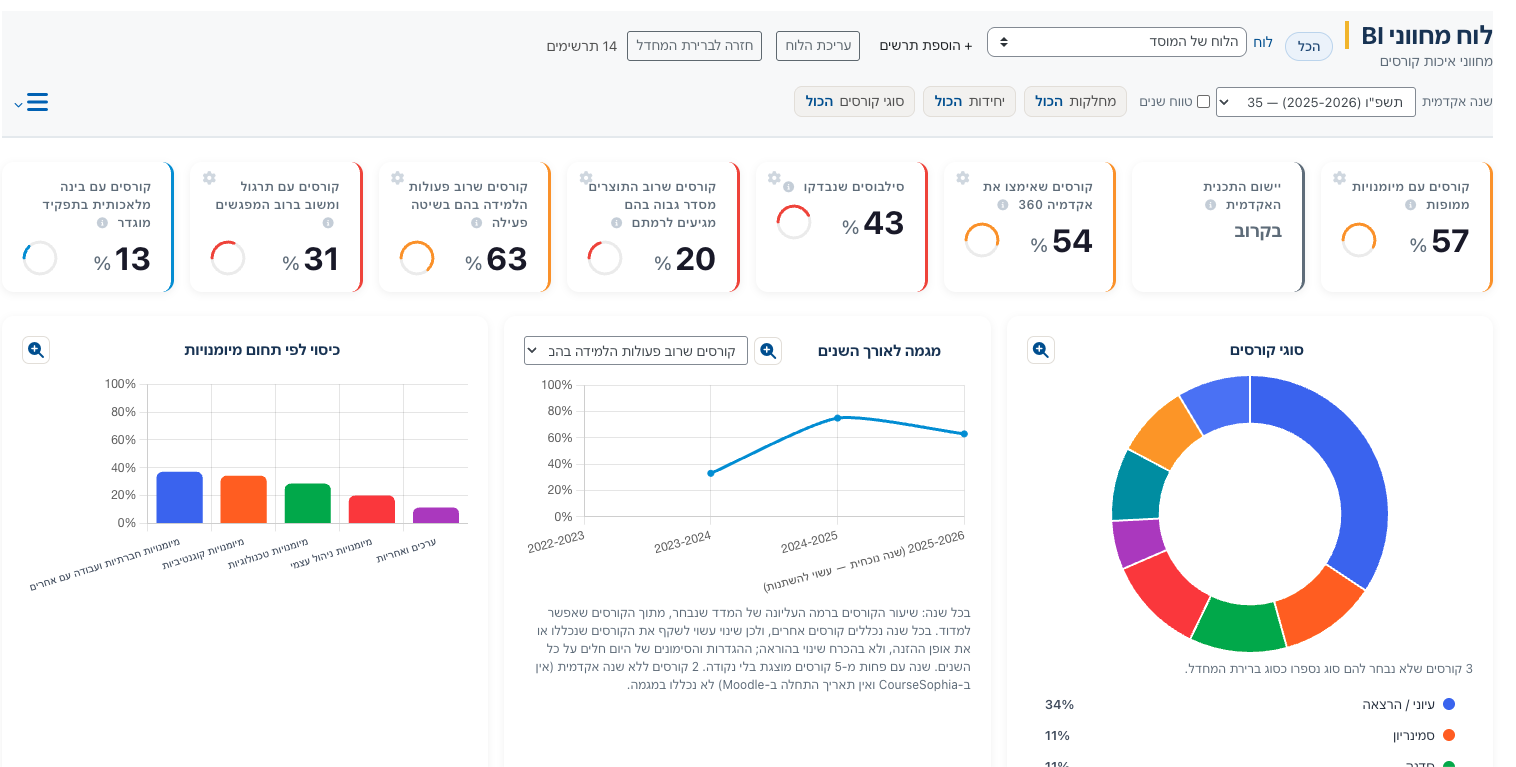
Monitoring teaching quality across every course in the institution, with a focus on skills and on AI integration
Quality monitoring gives academic leadership and heads of department a complete picture, instead of relying on a sample that is not representative.
A first-of-its-kind dashboard dedicated to course quality, with a focus on skills, active learning and AI in teaching
The dashboard does more than display data. It explains and justifies it, lets you ask questions and recommends how to improve, all in plain everyday language:
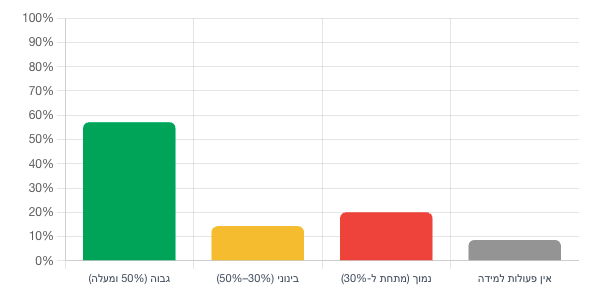
- Active learningCourses in which most learning activities use active methods
- Depth of learningCourses in which most outcomes reach higher-order thinking
- Practice and feedbackMeasures the level of practice and feedback throughout the course
- AI integrationCourses in which AI has a defined pedagogical role
- SkillsCourses in which the skill is practiced, with a view by skill area
- TrendChange over the years, by year, department, unit and course type
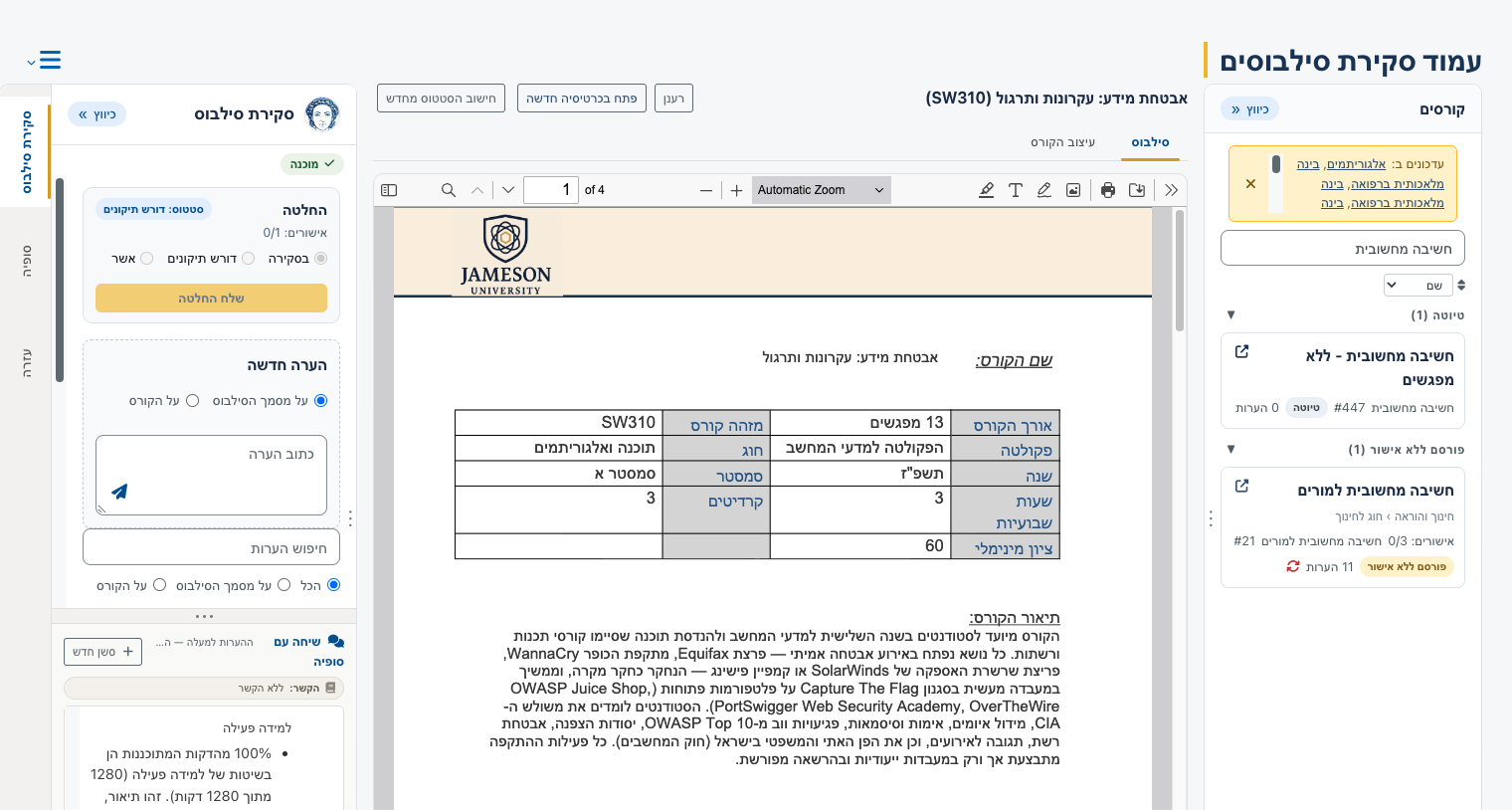
An in-depth review of every syllabus in the institution, whether you are a small college or an institution teaching thousands or tens of thousands of courses
An in-depth syllabus review is hard to sustain, whether an institution teaches a few hundred courses or thousands. Reviewers and teaching and learning centers manage to read only a small share of syllabi, and the rest are published without anyone reviewing them.
CourseSophia's agents read every syllabus in depth: the learning outcomes, the alignment between outcomes, activities and assessment, teaching methods, workload and the role of AI. They note what is in order and what needs correcting, and the reviewer at the institution makes the decision.
Skills-based learning across the entire academic program
Every institution can define the skills it gives its graduates. CourseSophia spreads them across every part of the program, from the graduate profile to the teaching in each course, and shows leadership how well they are being acquired across the institution.
Defines the graduate skills
The institution decides which skills its graduates will bring to the workplace and to society, according to its vision, fields and programs.
Translate them for every course
The agents translate the graduate skills into the skills students will acquire in each course, in line with the program.
Plans how they will be acquired
As part of course planning, the lecturer decides through which activities and assignments students will acquire the course skills.
Shows how well they are acquired
Skill acquisition across each program and institution-wide, by year, faculty and department.
The institution can show students, employers and any reviewing body which skills its graduates acquire, and where.
Planning the academic program matters more than ever
Knowledge is available to everyone, AI is changing the role of higher education, and what graduates can do is becoming more important than what they know. To lead this change, an institution needs to see the whole learning cycle, from the program to the teaching that actually happens.
Knowledge is available; skills are decisive
When any information is a search away, the value of a degree is measured more and more by the skills graduates acquire. The program needs to define them, spread them across courses and show that they are acquired.
AI is changing the role of higher education
AI tools write, summarize and solve for the student. Institutions need to redefine their role in educating young people and decide, in every course, what role AI plays, so that it supports learning rather than replacing thinking.
Few tools see the whole learning cycle
Most tools handle one part: course management, syllabus writing or reporting. CourseSophia connects the program, the courses, the teaching and the dashboard in one system.
What the institution gains
Quality you can demonstrate
Clear, measurable indicators for teaching, learning and skill acquisition that can be presented to leadership, committees and any reviewing body.
Attracting students
A program with a defined, up-to-date graduate profile, grounded in the needs of employment and the field, is easier to present to applicants.
Saving time, with better results
The information comes from work lecturers do anyway: building the course and writing the syllabus. No extra forms and no annual survey.
Program, courses and teaching in one system
The academic program defines what each course contributes to the graduate. Courses are built accordingly, and actual teaching comes back as a status view that lets the program be updated over time.
Planning and managing the entire academic program
The academic program defines what graduates need to know and be able to do when they complete the degree. CourseSophia helps draft the program, decide what each course contributes to it, and check on an ongoing basis whether the courses, together, actually get the graduate there.
Choose a graduate outcome to see in which courses it is taught, and to what level.
| Data literacy | Critical thinking | Science communication | Ethical judgment | Teamwork | |
|---|---|---|---|---|---|
| Intro to Data Science | Introduced | Introduced | Introduced | ||
| Statistics I | Reinforced | Introduced | Introduced | ||
| Research Methods | Reinforced | Reinforced | Introduced | ||
| Machine Learning | Mastered | Reinforced | Reinforced | Reinforced | |
| Data Ethics Seminar | Mastered | Reinforced | Introduced | ||
| Capstone Project | Assessed | Assessed | Mastered | Missing | Assessed |
Ethical judgment is taught at the introductory level only. No course takes it to mastery or assessment before graduation.
The four levels describe how far a course advances a graduate outcome. The example is for illustration only and is not based on institutional data.
Drafting the program
Sophia proposes a draft of the program goals and graduate outcomes based on the institution's strategic documents. The program head edits and approves.
Dividing responsibility among courses
Each course is assigned the graduate outcomes it serves and to what level. The program sets what the course contributes and does not interfere with the course content itself.
Comparing plan and practice
A coverage map compares what was assigned to each course with what the course states in its syllabus, and flags where a decision is needed.
An outcome taught at the introductory level, with no course taking it to mastery or assessment.
Two courses cover the same outcome at the same level.
The syllabus was updated, and the course no longer serves what was assigned to it.
A course assumes knowledge that is taught only in a later course.
When the institution turns it on, actual achievement can be compared with the plan, to decide whether the program itself needs to change.
A team of specialized agents, led by Sophia
Sophia is available in a side panel on every screen and routes each request to the right agent. Each agent draws on institutional knowledge and data in real time, checks the result, and shows where every answer came from.

A team of AI agents with broad academic knowledge, adaptable to any institution. At every stage and level, control and the final decision are yours.
What else the system includes
CourseSophia works inside Moodle, an environment the institution and its lecturers already know.
Course planning with Sophia
Learning outcomes, knowledge and skill levels, units, sessions and learning activities. The result goes straight into Moodle and into the syllabus.
Syllabus review and publication
An in-depth review of every syllabus by the agents, and an approval workflow with each unit's reviewers and approvers.
Academic quality dashboard
Indicators for active learning, depth of learning and AI integration, with plain-language questions and recommendations, by year, faculty and department.
Hebrew and English
Sophia works in both languages, and the interface supports right-to-left writing.
Fitted to the institution
The institution's pedagogical model, syllabus template, organizational structure and tool catalog.
Demo site
Ten complete courses (currently in Hebrew) where you can work with Sophia and the dashboard. Access is given to staff of academic institutions, with approval from the Sophia-AI team. Request access or sign in
The same information, the right view for each role
Lecturers see pedagogical terms. The teaching and learning center sees the codes and indicators it already knows. CourseSophia follows each institution's own division of academic responsibility.
- An institutional view by year, faculty and department
- Coverage of graduate outcomes and skill acquisition across programs
- Planning programs and institutional initiatives
- Presenting teaching and learning quality through clear, measurable indicators
- Indicators for depth of learning, active learning and AI integration across all courses
- Defining the program and assigning outcomes and skills to courses
- Tracking coverage and handling findings, in coordination with the provost and the academic senate
- An in-depth review of every syllabus in the department, before publication
- One institutional standard that Sophia applies in every course
- A continuous picture instead of an annual survey
- An institutional skills catalog and measurement of how they are taught
- Building the course site with an AI agent that has pedagogical knowledge, and a syllabus at the click of a button
Guided implementation
An institutional system should not be complicated for the institution. Each institution is assigned a personal implementation guide from the Sophia-AI team, who works with its staff from the start until the system runs as part of routine work.
Start with a limited scope
One department or one program, according to what matters to the institution now. There is no need to roll out the whole system on day one.
Fitted to the institution
Together with the institution, the guide sets up the pedagogical model, the syllabus template and the organizational structure, and trains lecturers and staff.
Expand at the institution's pace
Once the first stage is running, the system expands to more departments and programs. The guide continues to support the institution along the way.
Let's go through one of your programs together and plan where to start
In the conversation we look at one of your programs: which skills and graduate outcomes it defines, how the courses deliver them, and where it makes sense to begin.
To schedule a conversation: info@sophia-ai.tech